Cryoconite holes represent the most active and biodiverse habitats in the supraglacial (ice surface) environment. Within cryoconite holes the majority of microbial life is concentrated in and around spheroidal granules of 1-10mm diameter, composed of mineral and organic matter, known as cryoconite. However, overlying cryoconite is almost always a column of meltwater centimetres to tens of centimetres deep, and a new paper published in Polish Polar Research has emphasised the importance of this water as a microbial habitat.
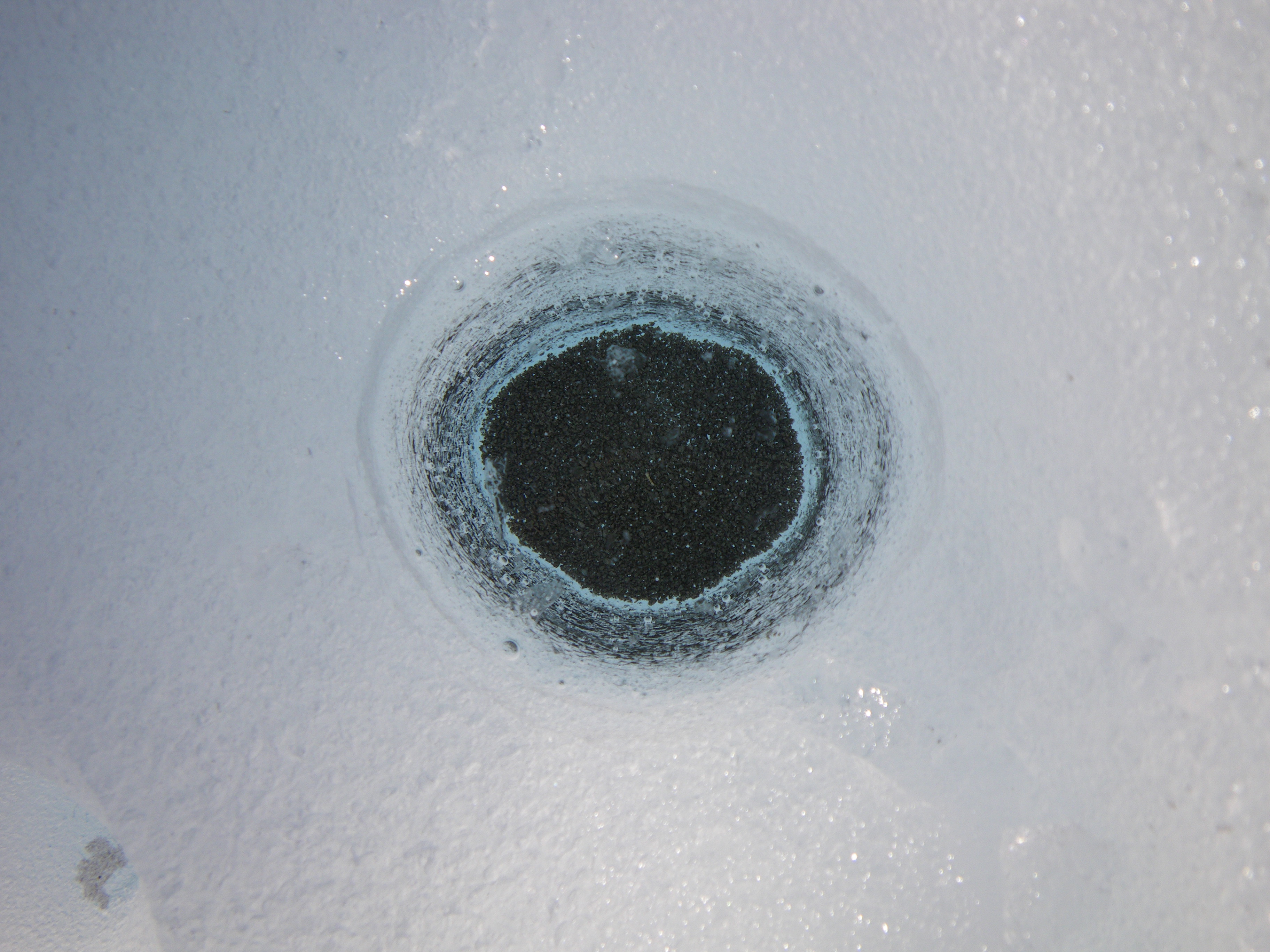
Mieczen et al (2013) focussed upon ciliates in cryoconite melt water. Ciliates are a type of protozoan. Protozoans are single celled, eukaryotic organisms which means they contain a membrane-bound nucleus, amongst other organelles. Ciliates are probably the most complex protozoans and are so called because they are covered in ‘cilia’ – small hair-like organelles on their outer membrane which they use as touch-sensors, for movement and for feeding. They are particularly important in cryoconite melt water because they metabolise the tinest primary producers, regenerate nutrients and provide a food source for higher organisms (Mieczen et al, 2013). However, no previous studies attempted to identify exactly which ciliates are present in cryoconite hole communities and what their role in ecosystem functioning might be.

Mieczen et al (2013) set about filling this research gap by visiting Ecology Island in West Antartica, initially proposing two hypotheses: firstly that the abundance of various ciliate species would vary according to depth in the vertical profile of a cryoconite hole; second that this is related to changes in physical and chemical conditions in the melt water.
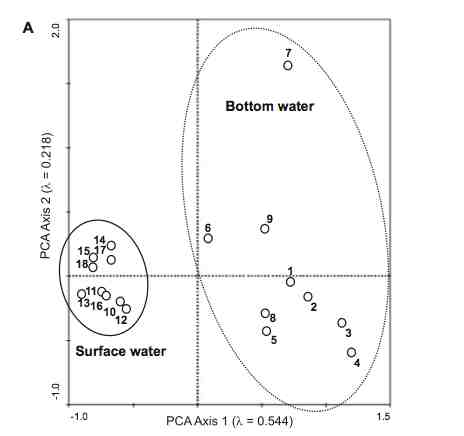
At nine sites along a transect on Ecology glacier, water from near the surface and at the bottom of cryoconite holes was removed for analysis. The ciliates in each sample were identified and counted by eye using an optical microscope, which must have been an arduous and time consuming process! Waters were also tested using spectrophotometry to determine their hydrochemistry. Species distribution and water chemistry were then compared using the common statistical techniques PCA (principal component analysis) and RDA (redundancy analysis).
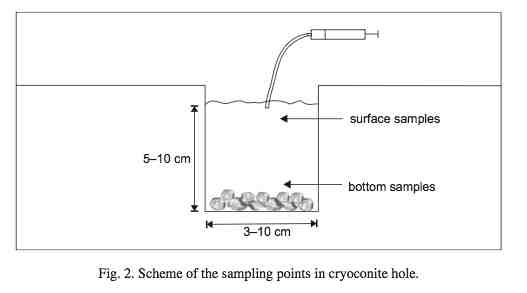
Sixteen types of ciliate were found in the cryoconite melt water samples. Ciliates were more abundant lower in the water column, probably because of closer proximity to food sources originating in cryoconite sediment, as supported by the chemical analyses: nutrients were far more abundant nearer the sediment; furthermore higher temperatures near the sediment may also promote ciliate growth and reporoduction. Both temperature and nutrient concentration were clearly related to cliliate abundance.
Species composition also changed with depth. Near the surface, ciliates in greatest abundance were those that can feed on a wide range of carbon sources (mixotrophs), or which specifically feed on algae (algiverous), whereas near the cryoconite sediment ciliates feeding on bacteria (bactiverous) dominated. This is related to the high bacterial production in the sediment.
This provides a fascinating example of the complexity of these microbial habitats – not only is there a heirarchical food web existing in the cryoconite sediment, but also in protozoa in the overlying meltwater. These tiny, hairy, single celled organisms relocate to find the most appropriate food source and thrive in micro-niches in what seems at first to be homogenous, empty water! Amazing!
REF:
Mieczan, T., Gorniak, D., Swiatecki, A., Zdanowski, M., Tarkowska-Kukuryk, M., Adamczuk, M. 2013. Vertical microzonation of ciliates in cryoconite holesin Ecology Glacier, King George Island. Polish polar Research, 34 (2): 201-212

 To The Poles